


The Future of Immersive Experience
- Francisco Chann
- Oct 8, 2021
- 4 min read

Updated: Apr 20, 2022
Forbes reported that global spending on AR and VR headsets, software and services, including purchases by consumers, rose in 2020 to $12 billion, up 50% from 2019.
In 2020, 32% of consumers used AR for shopping. The augmented reality and virtual reality market for the retail industry alone is expected to reach $2,094.08 billion by 2027, witnessing market growth at a rate of 68.5% in the forecast period of 2020 to 2027.
In view of this, several players are emerging in the market with the aim to navigate VR towards mainstream adoption. Moreover, the launch of commercial virtual reality headsets is expected to accelerate the market growth, and investments by technological giants such as Google is likely to create an advancement in the field of immersive technology. Moreover, with the increasing investments in research and development by the other vendors, the market is expected to be more competitive in the years to come.

What is Coming Soon?
Virtual reality is not just a standalone technology designed for creating an alternative world, it can create a life-like reality. VR is one of the most immersive technologies whereby it involves wearing a headset that created a 360-degree simulation. The upcoming trends for VR are likely to change the business delivery and user experience. Here are some of the exciting applications that is due soon.
VR and AI Integration
Lists of VR trends can never be complete without Artificial Intelligence, the duo has the potential to completely change the world. However, both of them are at their early stages and have only made small appearances here and there. For instance, the features available on Instagram and Snapchat are the combination of both AI and VR.
Education and Training
Education and training are becoming more costly over time. With VR technology, organizations will be able to cut back on their training spend and give their employees the best training without imposing them to any potential risk. For instance, Walmart has used 17000 Oculus Go headsets for training its employees in the customer service department. Also, the U.S. army has started using Microsoft HoloLense technology to offer soldiers real-time updates on their environments.

Travel and Tourism
VR can now enable its users to travel the world by being at home. By playing an immersive video, you can travel at any of your favourite destinations or visit museums without even packing your bag. It provides its users with the ‘try it before buy it’ experience. Apart from this, it also allows its users to have a street view, check the venues and nearby restaurants by just being in the room.

Retail
AR/VR technologies have become popular among retail businesses as well. Retailers are seeing the potential of this technology and utilizing it to its full extent.
For example, a virtual clothes-fitting app could be a great technological extension for a retail business. An app like this creates a 3D model of a person from photos, then uses this model to fit virtual clothes. Major retailers have developed similar applications that customers can use to try clothes on virtually before buying them, enhancing the customer experience.

Socialization
There are already a number of VR-based social platforms that allow friends or strangers to meet up and chat or play in virtual environments, such as VR Chat, Altspace VR, and Rec Room. As with VR in other fields, the growing level of immersion that is possible thanks to new technological developments will make them more useful and more attractive to mainstream audiences throughout the coming decade.
Meta is already working on a beta to allows people to build and share collaborative online worlds where they can hang out, play games, or work together on collaborative projects in a metaverse.
While we will always make time for meeting up with friends and loved ones in the real world, as our working and school lives become increasingly remote, it’s likely that more of our social interaction will move into the online realm, too. Just as we are no longer barred from careers or educational opportunities due to an increasingly virtualized world, we will have more meaningful ways to connect with other humans as technology improves in this area.
And of course – VR in games and entertainment
The “killer app” for VR is gaming, and the reason the technology is developing at the pace it is, is due to the large market of people willing to spend money on the most impressive and immersive entertainment experiences.
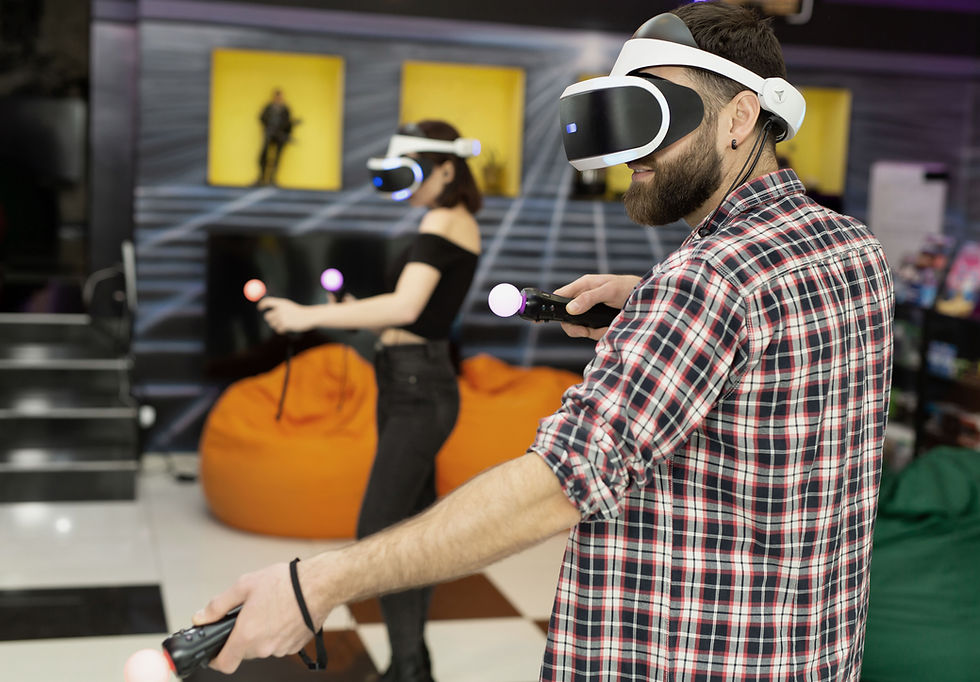
Sandbox VR operates real-world VR centers where equipment that it simply wouldn’t be practical or affordable to use in our homes offer some of the most immersive experiences yet created. Using full-body haptic feedback suits, they offer five games like Star Trek, that let groups cooperate or battle it out in deep space, aboard ghostly pirate ships, or through a zombie infestation.
In sum, while it is undeniable that VR is big in today’s time, there is a lot of room for improvement. There are limited choices when it comes to VR products available on the market, and for many, it is still a bit expensive. It would be safe to say that it is still in its infancy, but progressively, it is getting to the top.



Comments